

MDSU Launches Germany’s Largest Facility for Metal Recovery from Incinerator Bottom Ash
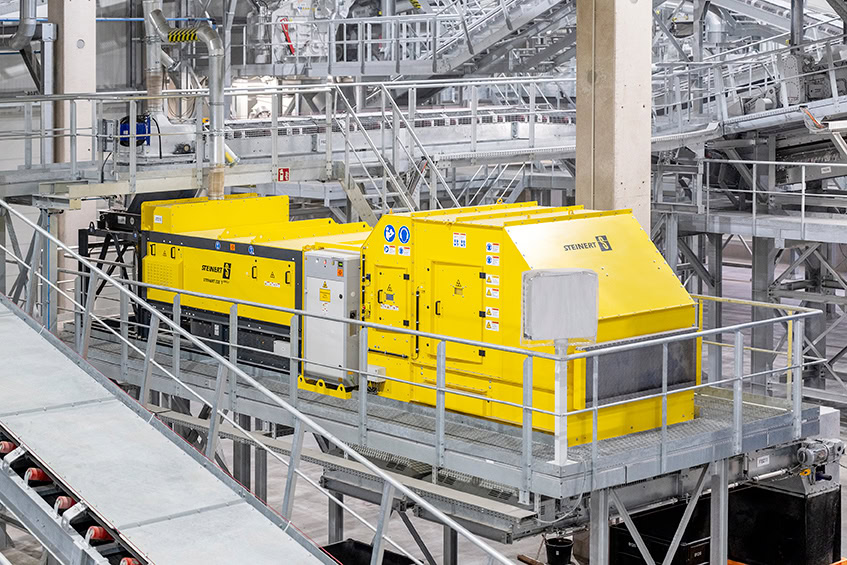
MDSU has officially commissioned a new flagship facility in Magdeburg, marking a major leap forward for Germany’s waste-to-energy sector. The state-of-the-art plant, which began operations in late 2024, sets a new benchmark in material recovery by transforming incinerator bottom ash—long treated as landfill waste—into valuable secondary raw materials. The Magdeburg-based operation is now the country’s largest plant dedicated to processing non-ferrous metals from incineration residues, with an annual capacity of up to 90,000 tonnes. Each year, Germany produces roughly 1.5 million tonnes of bottom ash from municipal solid waste incineration, containing significant volumes of recoverable metals such as aluminium, copper, brass, and stainless steel. MDSU’s advanced recovery process is powered by high-performance technology from Cologne-based STEINERT, including eight Eddy Current separators and the next-generation STEINERT XSS T EVO 5.0. The multi-stage system ensures exceptionally pure outputs of both light and heavy metal fractions, maximizing recovery rates and overall efficiency. “The goal is to extract the maximum from the slag,” said André Hartl, Managing Director of MDSU. He noted the company’s long-standing partnership with STEINERT as central to the project’s success and its broader ambition to contribute to a more circular, resource-efficient economy. The facility’s launch comes at a time when Germany—and the EU more broadly—is scaling efforts to close material loops and reduce dependency on primary raw materials. With industrial demand for recycled metals continuing to rise, MDSU’s Magdeburg plant is positioned to play a key role in reshaping how waste is viewed and valued. This latest investment underscores Germany’s commitment to technological innovation in the waste management sector. By turning ash into a resource stream, MDSU is helping to future-proof the country’s waste-to-energy infrastructure and advance its sustainability agenda.