

The STEGs Redefining Solar Power
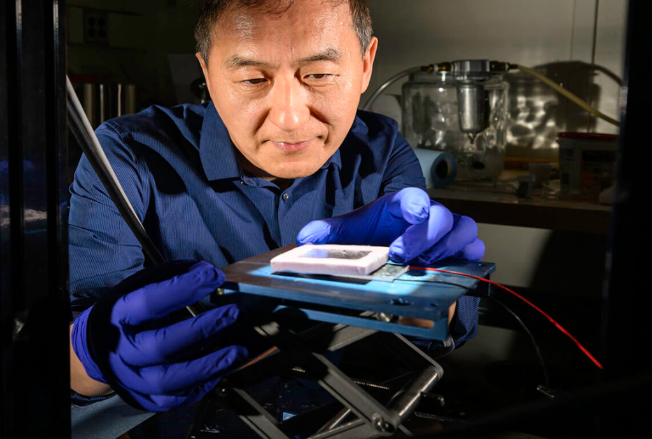
Solar thermoelectric generators (STEGs) may soon play a much bigger role in clean energy, thanks to a major breakthrough from scientists at the University of Rochester. By shifting focus away from semiconductor materials and toward precise thermal management, the team has developed a STEG that performs 15 times better than current leading systems. STEGs generate electricity using heat differentials—a process known as the Seebeck effect. While they’ve long been used to convert waste heat into power in industrial settings, their low efficiency and high production costs have kept them on the fringes of renewable energy strategies. The new design takes a radically different approach: instead of upgrading the materials inside the generator, the researchers engineered the surfaces that manage heat flow. Using femtosecond laser pulses, they treated tungsten to create a “black metal” that absorbs sunlight efficiently while minimizing unwanted heat loss. A transparent plastic layer acts like a greenhouse, trapping more heat on the device’s hot side. On the cold side, the team laser-etched aluminum with microstructures to enhance heat dissipation through both radiation and convection—boosting the overall temperature gradient across the system. This dual strategy—reducing heat loss where it matters and increasing cooling where it’s needed—translates into a dramatic jump in power output without significantly increasing the size or weight of the device. Applications for this new generation of STEGs could include wearable electronics, aviation sensors, off-grid medical devices, and wireless sensor networks—places where compact, self-powered systems are critical. The findings were published in Light: Science and Applications, in a paper titled “15-Fold Increase in Solar Thermoelectric Generator Performance Through Femtosecond-Laser Spectral Engineering and Thermal Management.” Though still at the research stage, this leap in performance signals a broader rethink of how solar energy can be captured—not just through photovoltaics, but by maximizing heat, too.