

Better Simulations for Aerospace: Malte Krack’s Team Tackles Oscillations
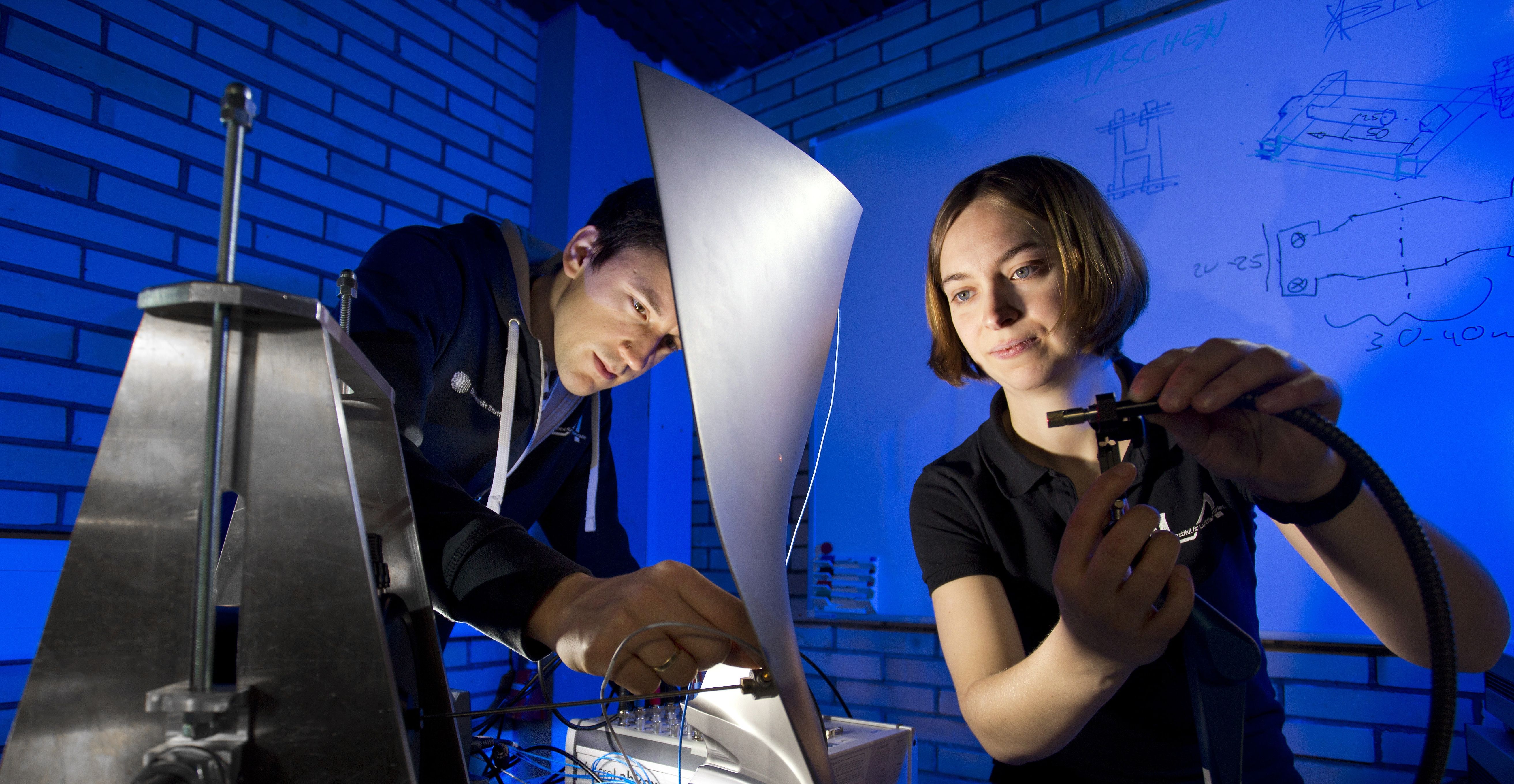
When engineers design lightweight aircraft, engines and wind turbines, they need to predict vibrations and keep them under control. Current simulations cannot represent the tiny movements inside joints and the much larger oscillations they must damp. Professor Malte Krack from the University of Stuttgart wants to change that by developing multi‑scale simulations and making damping calculable. Oscillations can tear off fairings or break engine blades. Damping through friction and shocks dissipates these forces, but the movements in joints are a hundredth the thickness of a human hair while the oscillations span millimeters. To bridge these scales, Krack’s team built a tribometer that maps the nonlinear behavior of friction and is already testing simulation tools used in industry. Precise modelling is especially important in lightweight structures where nonlinear effects become significant. As a newly appointed Henriette Herz Scout, Krack will nominate three international early‑career researchers with expertise in friction physics, fluid mechanics or energy harvesting. The Alexander von Humboldt Foundation’s Henriette Herz program lets professors nominate up to three international fellows for two‑year positions; about 100 fellowships are awarded annually.