

Standardizing Long Goods Handling in Industrial Logistics
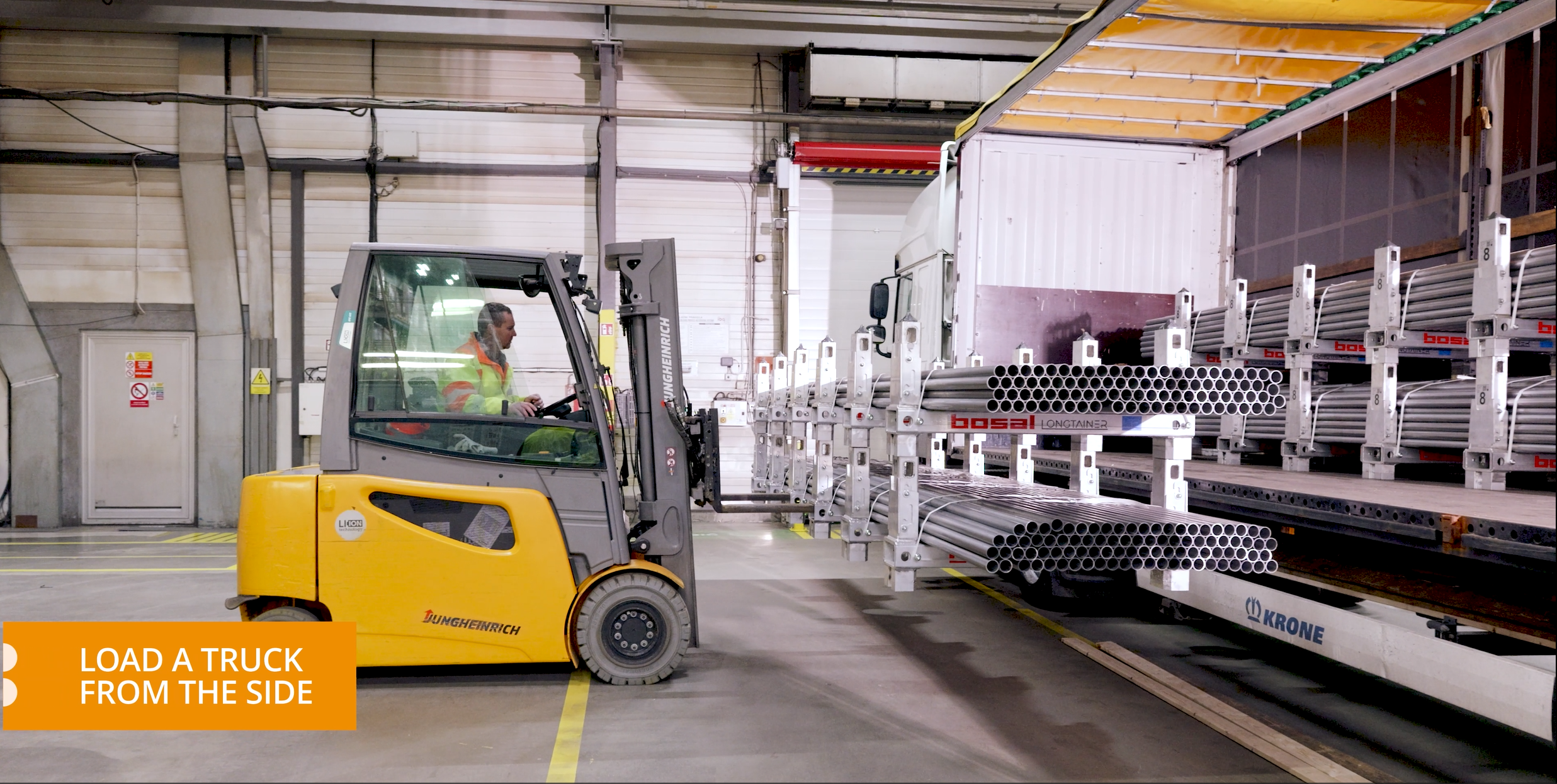
In many industrial supply chains, long goods such as steel/alu profiles, pipes or plastic long elements are still handled as special cases. Unlike pallets or containers, they often lack standardized load carriers and are transported using adapted racks or improvised supports. While these solutions may work locally, they rarely provide consistent, repeatable processes across sites. Operationally, this leads to recurring challenges. Long goods often have uneven weight distribution and are sensitive to bending or surface damage. During crane or forklift handling, loads can shift or require manual correction. In transport, securing methods are frequently based on individual practice rather than defined geometry. Each additional handling step increases time consumption, safety exposure and damage risk. As logistics operations become more automated and digitally managed, undefined cargo creates friction. Warehouse systems, load planning tools and safety frameworks rely on predictable handling units. Long goods, when treated as loose items, remain outside this structured logic. One practical response is the use of engineered, reusable carriers specifically designed for elongated materials. The Longtainer concept represents such an approach by providing defined dimensions, stable support structures and clear lifting points. This transforms long goods into a standardized handling unit that can be more safely moved, stored and integrated into digital processes. The challenge is structural rather than product-specific: long goods should no longer be treated as exceptions, but integrated systematically into logistics operations. Standardized, safe, and reusable handling solutions not only improve operational reliability, but also support sustainability goals and protect staff - making them a critical element of modern, efficient industrial supply chains.