

Air to Air Thermal Shock Chambers
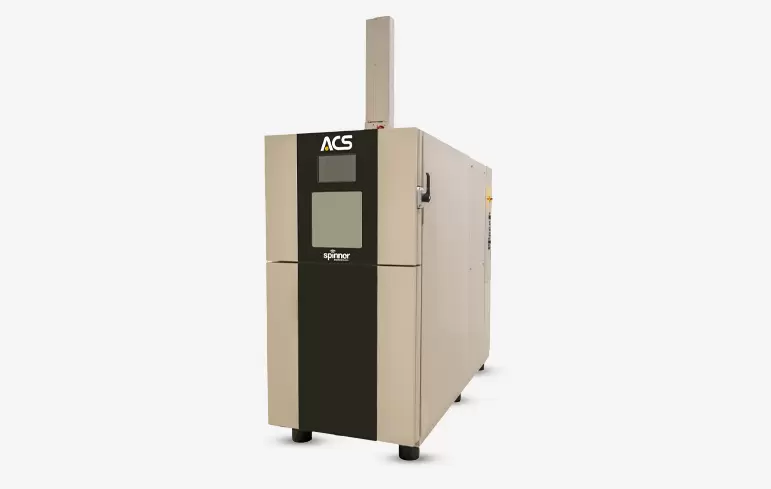
Climatic chambers for thermal shock tests are used to subject the specimen to strong shocks by passing it suddenly and repeatedly from a hot temperature zone to a cold one. The specimen can cool or heat at different rates at different points, depending on the material. If exposure to repeated cycles cause large expansions and contractions in volume, the material could undergo strong mechanical stresses and sometimes break. The traditional approach: two temperature methods, specimen moving with the basket CST models - Vertical (130 and 320 l) or horizontal (500 and 1000 l) chambers with 2 compartments corresponding to 2 different temperature levels. The 130 l model, named “spinner”, supplied with a motorized system connected by a screw rod for the transfer of the specimen between the hot and cold compartments, has been renewed in 2024 and it offers now better features in terms of efficiency, noise level and energy consumption at the same performances. Go to the Academy article for more details. An alternative approach: two temperature methods, specimen fixed in its position CST "flapper" models - These chambers (130 and 320 l) have a design that can dramatically improve the space crowded situation of many testing laboratories, as the specimen is fixed in its position and the chamber is connected alternatively to hot and cold compartments.