

Apple Deepens U.S. Roots with $600 Billion Commitment
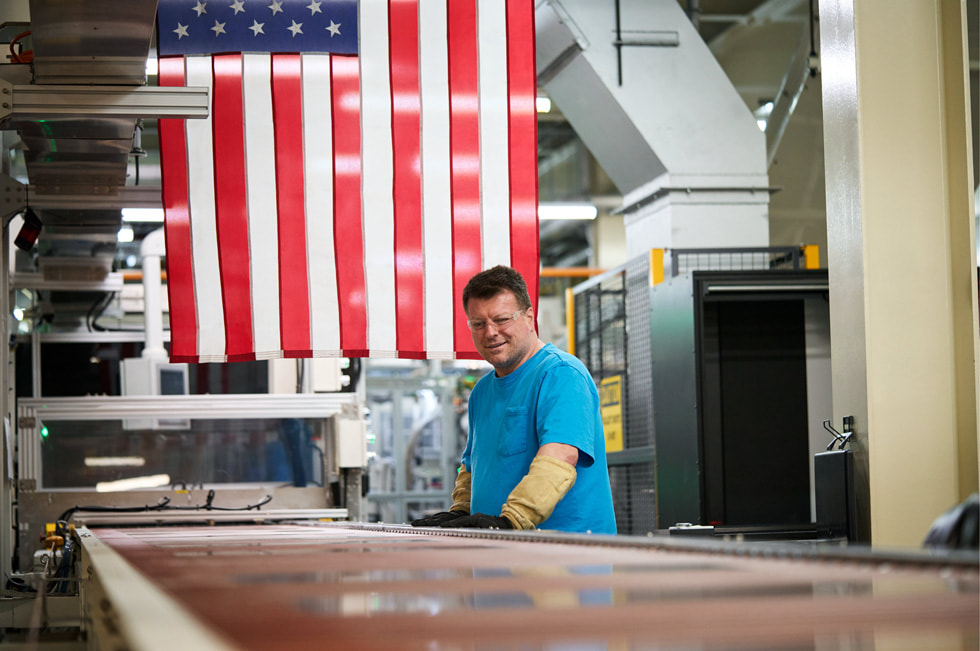
American Manufacturing Program signals shift in domestic tech production Apple is significantly expanding its domestic footprint with a new $600 billion investment commitment, including the launch of its American Manufacturing Program (AMP)—a strategic initiative aimed at re-shoring key elements of the company’s global supply chain. The AMP will channel funding into U.S.-based component production, advanced materials, and semiconductor infrastructure, accelerating the localization of Apple’s manufacturing ecosystem. The program’s first wave of partnerships spans 10 major suppliers, including Corning, Texas Instruments, Amkor, Broadcom, and GlobalWafers, with facilities spread across Arizona, Texas, Kentucky, and New York. Apple’s approach reflects a broader trend toward supply chain resilience and onshoring of critical technologies. The company reports that over two-thirds of its U.S.-made components are exported, making domestic manufacturing not only a national investment but also a pillar of its global strategy. The new program also supports Apple’s goal of creating a fully end-to-end silicon supply chain within the U.S. — a move that positions Apple at the forefront of domestic chip production. Partners such as TSMC and GlobalFoundries will help produce over 19 billion chips for Apple products by 2025, with wafer, fabrication, and packaging all handled by U.S.-based facilities. Infrastructure expansion plays a key role. Apple is scaling up its data center in North Carolina, constructing a new server facility in Houston, and continuing development on its second Austin campus, which will host advanced R&D labs for hardware and AI teams. Meanwhile, a new Apple Manufacturing Academy in Detroit, opening this month, will train small and mid-sized U.S. firms in advanced manufacturing and AI integration. Apple now supports 450,000 U.S. supplier and partner jobs across all 50 states and plans to directly hire an additional 20,000 U.S.-based employees over the next four years—primarily in silicon engineering, software development, and AI. While the AMP is a corporate initiative, its implications extend to national competitiveness in sectors like semiconductors, cloud infrastructure, and precision manufacturing. As geopolitical and economic pressures reshape global supply chains, Apple’s U.S. expansion marks a strategic pivot—positioning the company and the country at the center of the next era of tech innovation.