

🌱 Europe’s Green Steel Market to Hit $12 Billion by 2032, Driven by Hydrogen Technology
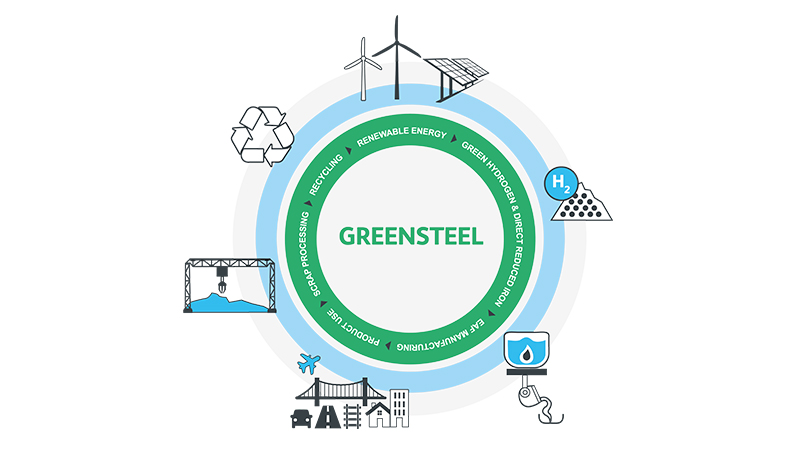
The European green steel market is on a trajectory for unprecedented growth, projected to reach $12.01 billion by 2032, up from $236.2 million in 2025, according to Persistence Market Research. The market is expected to grow at an astonishing CAGR of 75.3%, fueled by EU climate policies, rising industry demand, and technological breakthroughs in hydrogen-based steelmaking. 🔹 Key Growth Drivers ✅ EU Climate Policies & Carbon Regulations: The European Green Deal and the Fit for 55 package aim to cut greenhouse gas emissions by 55% by 2030, pushing steelmakers toward cleaner production methods. Additionally, the Carbon Border Adjustment Mechanism (CBAM) will impose carbon pricing on imported steel, favoring European producers investing in sustainable solutions. ✅ Hydrogen-Based & Low-Carbon Steel Technologies: Steel giants like SSAB, ArcelorMittal, and Thyssenkrupp are pioneering hydrogen-based direct reduction (DRI) and electric arc furnaces (EAFs) to replace coal-based blast furnaces. Projects like HYBRIT (SSAB, LKAB, and Vattenfall) are leading the transition toward fossil-free steel production. ✅ Rising Demand from Key Sectors: The automotive, construction, and renewable energy industries are increasingly adopting green steel to meet their sustainability targets. Companies like Volvo and BMW are integrating carbon-neutral steel into their vehicle manufacturing, while the wind energy sector requires sustainable materials for turbines and hydrogen storage. 🔹 Challenges & Industry Bottlenecks ❌ High Production Costs: Hydrogen-based steelmaking remains more expensive than traditional methods due to the high costs of renewable hydrogen and infrastructure development. ❌ Supply Chain Constraints: The industry faces hurdles in green hydrogen availability, raw material sourcing, and renewable energy supply, slowing mass-scale adoption. 🔹 The Road Ahead To overcome these challenges, governments and private investors are increasing funding and incentives for green steel production. Strategic partnerships between steel manufacturers, renewable energy firms, and policymakers will be crucial for scaling up sustainable steel. As Europe solidifies its leadership in green steel, it faces competition from North America and Asia, where similar investments are being made. However, with continued policy support, technological advancements, and industry collaborations, Europe is well-positioned to drive the global green steel revolution.